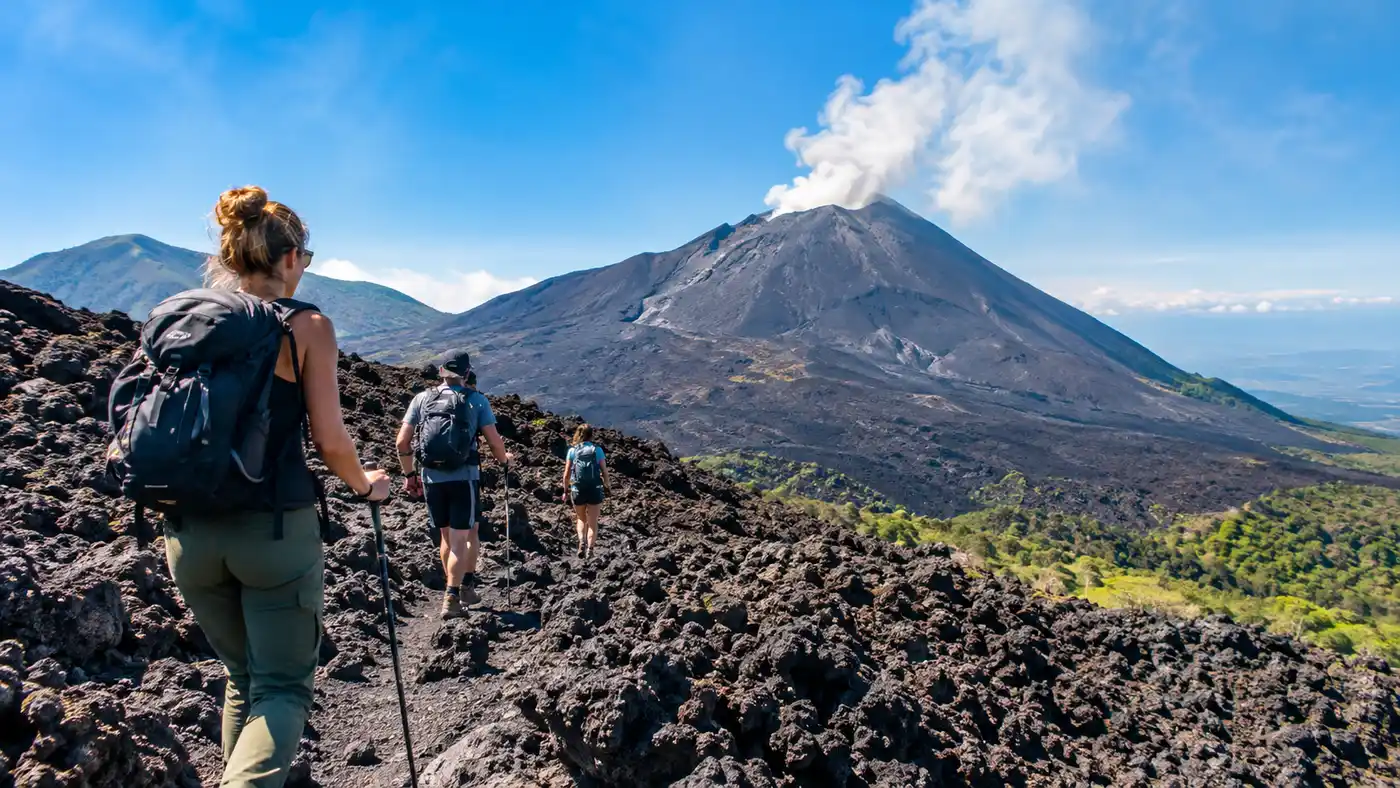
Pacaya Volcano Hike Difficulty: Distance, Elevation, and Time
Most people in Antigua will tell you Pacaya is a walk in the park, but they usually forget to mention the loose volcanic gravel that pulls your feet backward with every step. When people ask about the pacaya volcano hike difficulty, the honest answer sits somewhere between an afternoon nature stroll and a proper mountain trek. You do not need mountaineering credentials to tackle it, yet showing up in smooth-soled tennis shoes or carrying zero water will guarantee an unpleasant afternoon.
The trail offers an up-close look at active geology without demanding days of backcountry camping. Still, the grade creeps up quickly. Between the thin mountain air, the dusty tracks carved by pack horses, and the sheer heat radiating from old lava fields, your calves will definitely feel the burn long before you roast your first marshmallow over a volcanic vent.
Book your pacaya volcano hike experience:
Trail Distance, Elevation Gain, and Peak Height
The numbers look modest on paper. The total pacaya volcano hike distance measures around 3.2 miles out and back, depending on which offshoot path your guide takes once you reach the dry caldera. If you wander deeper across the blackened crust of the 2010 or 2014 flows, you might push the total pacaya volcano hike length closer to 4 miles. You begin walking at the San Vicente Pacaya park office at roughly 6,240 feet above sea level, ending on the high plateau beneath the active cone.
What catches most casual walkers off guard is the gradient. The pacaya volcano hike elevation gain clocks in at about 1,310 feet from the ticket booth to the main viewing shelf. That gain happens over a fairly short horizontal distance. Because you compress all that uphill work into just 1.6 miles on the ascent, the pitch averages a steep 15 percent grade, with several dirt chutes spiking closer to 25 percent.
As for the actual pacaya volcano hike height, the active summit cone of Pacaya reaches 8,373 feet. You will not stand on the true summit crater. Park rangers stopped allowing tourists to the very lip years ago because of poisonous sulfur dioxide fumes and sudden, unpredictable rock bursts. Instead, your trek ends at an elevation of roughly 7,550 feet on the stark, black plateau known as the Meseta. It still sits high enough to drop the temperature fast when cloud cover rolls over the ridge.
Note: Park authorities strictly prohibit hikers from scrambling up the unstable cinder cone to the crater rim. Toxic gas vents shift without warning, and the ash on that upper cone shifts like loose dry sand.
Trail Timing and Duration Round Trip
If you keep moving at an average pace, the time to hike up pacaya volcano takes roughly 75 to 90 minutes. Fit hikers who live at altitude might clock the climb in under an hour, but there is little point in sprinting. The route weaves past farmland, cedar patches, and overlook clearings that deserve a few minutes of your attention. You will want breathers, especially along the exposed mid-section where the trees thin out and the afternoon sun beats down on your neck.
Total pacaya volcano hike time usually ranges between 3 and 4 hours. That covers the walk up, an hour spent wandering around the jagged basalt flats, and the knee-jarring descent back to the park gates. How long does it take to hike pacaya volcano from start to finish? Most guided outings budget three and a half hours on the mountain, which leaves plenty of space for catching your breath, snapping photos of nearby peaks, and warming your fingers over underground heat vents.
- Ascent stage: 1 hour and 15 minutes of continuous uphill stepping on packed earth and loose pea-gravel.
- Caldera exploration: 45 to 60 minutes walking across craggy lava rocks, visiting the Lava Store, and finding steam vents.
- Descent stage: 40 to 50 minutes of sliding down ash paths, which is quick on the lungs but demanding on tired knees.
- Round-trip commitment: about 3.5 hours on the trail, not counting the 90-minute transport each way from Antigua.
Coming down takes roughly half the time of going up. The lower dirt sections turn into a brisk trot if your footwear has decent grip, though the upper volcanic gravel can easily pitch you onto your backside if you lean too far forward. Hiking poles help save your joints here. Without them, you end up bracing hard on your quadriceps the entire way down.
Underfoot Realities: How Hard Is the Pacaya Volcano Hike?
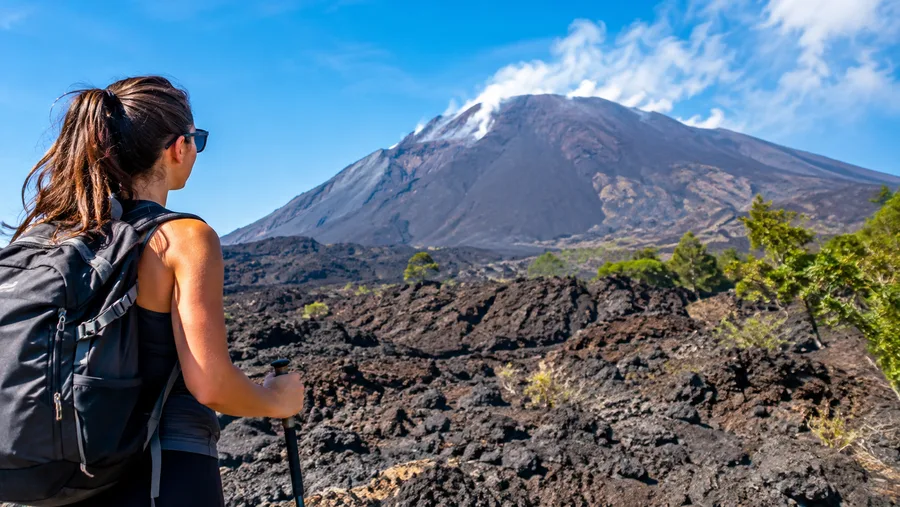
So, how hard is the pacaya volcano hike for someone of average fitness? It is moderately challenging, but completely doable if you take regular water breaks. The trail surfaces vary wildly. The first 20 minutes take you along an earthy farm road that feels deceptively civilized. Then the path narrows into a twisting trail where thousands of horse hooves have churned the soil into fine brown silt that cakes onto your skin.
The physical demand changes once you cross the treeline onto the old lava plains. You trade soft dirt for razor-sharp volcanic basalt and fields of black scoria. Walking over dried basalt feels like stepping across piles of broken dinner plates and brittle cinder blocks. The rocks wobble underfoot. If you trip here, the rough stone will tear right through thin leggings or cut open bare hands.
Pro tip: Pick thick-soled hiking shoes over lightweight running trainers. The jagged lava rocks tear soft foam soles to shreds, and underground heat pockets can actually melt thin rubber if you linger in one hot spot.
Dust is the other quiet adversary. In the dry months between November and April, passing horses kick up thick clouds of pulverized earth. Breathing heavy while hiking uphill through that haze can dry your throat out within fifteen minutes. Stashing a light bandana or buff in your pocket solves that headache easily. Before heading out, checking our guide on what to wear for the pacaya volcano hike will save you from wearing gear that gets ruined by grit and heat.
Book your pacaya volcano hike experience:
Pacaya vs. Acatenango: Is Pacaya the Easiest Volcano Hike in Guatemala?
Guatemala is stacked with volcanic peaks, from towering Tajumulco in the western highlands to the dramatic cones surrounding Lake Atitlán. Travelers constantly debate whether Pacaya holds the title for the easiest volcano hike in guatemala. Honestly, it does. While chicabal in Quetzaltenango involves fewer total steps, Pacaya has the infrastructure, clear tracks, and safety services that make it far more accessible to inexperienced hikers.
The contrast between a pacaya volcano hike vs acatenango is vast. Acatenango is a punishing, two-day slog involving over 5,000 feet of relentless ascent with a full cold-weather backpack, topping out near 13,000 feet. People finish Acatenango exhausted to their bones. Pacaya, by comparison, lets you climb in a t-shirt, roast marshmallows, and return to an Antigua café in time for a late lunch. It is easily the most forgiving option among the easiest volcano hikes in guatemala pacaya enthusiasts recommend to beginners.
| Volcano Trail | Distance (Round Trip) | Elevation Gain | Trailhead Elevation | Typical Pace |
|---|---|---|---|---|
| Pacaya (Standard Trail) | 3.2 miles | 1,310 feet | 6,240 feet | 3 to 4 hours total |
| San Pedro (Atitlán) | 4.5 miles | 3,900 feet | 5,250 feet | 5 to 6 hours total |
| Acatenango (Overnight) | 11.2 miles | 5,150 feet | 7,870 feet | 2 days (8 hrs up) |
| Agua (Day Climb) | 7.5 miles | 6,400 feet | 6,800 feet | 7 to 9 hours total |
Do not let the comparison make you reckless, though. Pacaya is still a high-altitude hike starting above a mile in the sky. If you flew in from sea level yesterday, that 1,300-foot pacaya volcano hike elevation gain will feel twice as steep as it looks. Give yourself a day or two in Antigua to acclimate before you begin marching up its flanks.
Horses, Local Guides, and Practical Trail Realities
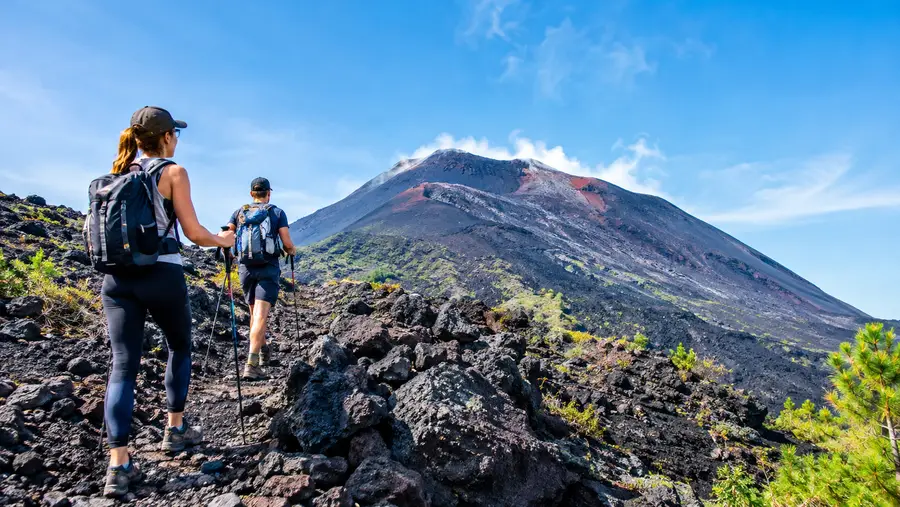
You cannot simply roll up and run up the trail on your own. National park rules require all visitors to take a registered local guide from the village cooperative at the entrance. The guides know where recent cracks have formed in the crust and which slopes carry rockfall risks. If you are curious about the logistics, check out our breakdown on whether you can hike pacaya without a guide to understand how the park operates.
From the moment you step out of your shuttle, local kids and horse owners will offer to follow you up the mountain. They call this service the "volcano taxi." A horse handler walks behind your group for the first mile, quietly waiting for someone to get winded. There is no shame in taking one if your legs give out or asthma kicks in. Renting a horse halfway up costs around 200 to 250 Guatemalan quetzales, but negotiate the price clearly before you put your boot in the stirrup.
- Walking sticks: local kids rent freshly carved wooden poles at the trailhead for 10 quetzales, and they are worth every penny on the slick gravel sections.
- Horse rentals: available at the base or along the lower switchbacks; handy if an unexpected knee issue crops up on the climb.
- Hydration needs: bring at least 1.5 liters of water per person, as there are no clean water points once you leave the village gate.
- Local cash: carry small quetzal bills for park fees, walking sticks, snacks, and the small artisan crafts sold at the lava plateau.
One odd thing you will notice is the temperature swing. You will sweat heavily during the steep woods section. Once you emerge onto the windswept volcanic plateau, the mountain breeze cuts through damp shirts immediately. Pack a light windbreaker in your daypack, because standing around the cooled lava fields waiting for sunset gets chilly in a hurry.
Frequently Asked Questions about pacaya volcano hike difficulty
How hard is the pacaya volcano hike for children or older travelers?
Kids aged eight and up generally manage fine if they are used to walking outdoors. For older travelers or anyone with knee issues, the steady incline and loose dirt pose some slip hazards, but the option to hire a riding horse makes it manageable for almost any fitness level.
How long is pacaya volcano hike from the parking lot to the lava?
The uphill walk covers roughly 1.6 miles and takes an average of an hour and fifteen minutes. Exploring the actual lava fields adds another half-mile of slow, deliberate walking across uneven rock surfaces.
Can you see flowing red lava on Pacaya right now?
Surface lava flows stop and start depending on active eruptive phases. As of recent months, you are more likely to see steaming fissures, incandescent glow deep inside thermal cracks, and baking hot rocks rather than glowing rivers of molten magma.
What makes the volcano guatemala pacaya hike elevation gain tricky?
The challenge comes from combining loose soil with high starting altitude. Because the trail begins at over 6,200 feet, you pull in less oxygen while your feet slide backward on pea-sized volcanic gravel with every forward stride.
Quick Reference
- Trail length: 3.2 miles out-and-back
- Elevation gain: 1,310 feet (400 meters)
- Highest trail point: 7,550 feet
- Hiking time: 3 to 4 hours round trip
- Difficulty rating: Moderate
Book your pacaya volcano hike experience:
The Bottom Line
Pacaya hits the sweet spot between an authentic volcanic adventure and an accessible half-day excursion. You will sweat on the dirt switchbacks, and the volcanic scree will challenge your balance on the way down, but the otherworldly view across the dried lava shelf makes the effort trivial. Grab a sturdy pair of shoes, bring plenty of water, and take the switchbacks at your own pace.
Read more about pacaya volcano hike.